
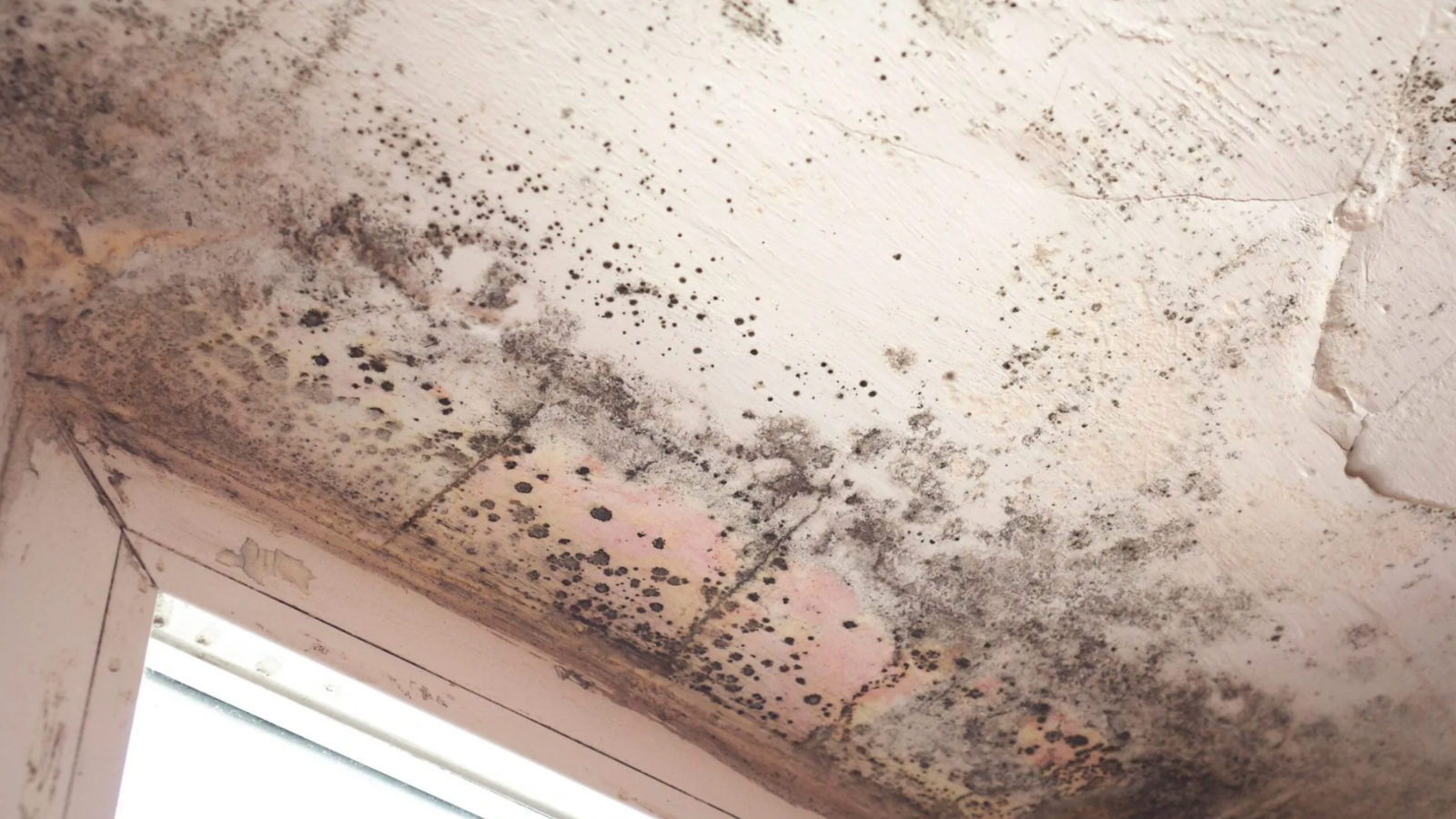
When I tell people that we had toxic mold exposure in our home, the reaction is pretty much the same. Wide eyes and “Oh wow…”
Everyone knows that toxic mold is bad…even dangerous. I was once one of those people. I lived in Florida for 5 years. You don’t live there long without becoming familiar with the general idea that mold growing in a house is a really bad thing. In retrospect, I should have known better than to live in a house that had mold growing ANYWHERE without giving it proper investigation. In retrospect, I should have overseen the remediation process myself to make sure it was being done according to industry standards. But that’s why they say hindsight is always 20/20.
I used to think I wasn’t a mold expert. This turned me into one. When my kids got sick, I was their nurse and as such, I turned into a researcher. Here’s what I understand now from the internet, from several mold inspectors and remediators I’ve spoken with, and from other people who’ve been through this.
Mold Facts 101
- There are many species of mold and most are a part of the natural environment. Not all are harmful. Some can be deadly.
- Mold is a big deal here in Florida where I live, but it is anywhere that has wet/humid weather. It also will grow in any indoor environment that has water damage that isn’t quickly taken care of. Mold likes the stuff we build our houses with, including our AC units.
- Indoor mold spore counts should be less than outdoor. A certain level indoors is to be expected because, again, mold is everywhere in our environment, but too many indicates a problem and indoor spore counts greater than outdoor indicates mold growth in your home.
- You can usually kill surface mold. If it’s below the surface, embedded in material, that material needs to be removed. This is non-negotiable. If you don’t remove it, the mold will just grow back.
- Mold is a living organism. It sends out microscopic, dust-like spores (like pollen) to reproduce. You can remove spores from non-porous surfaces like metal.
- You can’t always smell or see mold in a home. It hides behind tiles, inside walls and in attics/basements, in your air conditioner, and behind shelves or furniture.
- If the mold is a toxic kind, those spores produce compounds called “mycotoxins”. Mycotoxins are indestructible. You cannot kill them with bleach or any other agent.
Why Mold Wrecks One Person and Barely Touches the Next
Mold sickness (mycotoxicosis) is a tricky thing. While toxic molds (like Stachybotrys) are dangerous for everyone, the body’s response to the mold varies from person to person depending on a number of variables:
- Age – the younger or older you are, the more vulnerable.
- Types of mold, quantity, proximity, and duration of exposure.
- The individual’s health and existing toxin load. The human body is designed to filter and process toxins out. If, however, something goes wrong in the body or the exposure is greater than the body can handle, symptoms manifests.
- Genetics: this was a particularly significant factor for our family. Certain genetic mutations make the natural detoxification process a challenge. For example, the MTHFR gene mutation can prohibit the body from detoxifying efficiently on its own. If you can’t detoxify and you live in a moldy house, you are going to get very sick. This is what happened to us. Read more on MTHFR.
Common Symptoms of Mycotoxicosis
Buckle up. The symptoms on this list can be caused by other things, so if you experience some, that doesn’t automatically mean you have been exposed to toxic mold. But these have been reported among people with known mold exposure, including my family. If you can check off multiple symptoms on this list and your healthcare providers can’t find the cause, you may want to consider your environment.
Neurological & Cognitive: Headaches/migraines · Brain lesions · Progressive brain fog · Memory loss · Slurred speech · Confusion/disorientation · Dementia · Hallucinations · Word recollection issues · Decreased retention of new knowledge · Slowed reaction time · Balance problems · Dizziness · Vertigo · Numbness · Tingling · Paresthesia · Peripheral neuropathy · Sensory neuropathy · Muscle spasms and twitches · Tremors · Seizures
Digestive: Irritable bowel syndrome · Difficulty swallowing · Choking, spitting up (vomiting) · Coughing up blood/black debris · Nausea · Diarrhea · Constipation · Sharp abdominal pains · Stomach lesions · Leaky gut syndrome · Appetite swings
Musculoskeletal: Joint and muscle stiffness · “Ice pick” pain and other random pains, weakness
Respiratory & Sinus: Chronic allergies, congestion · Sneezing · Chronic sinusitis · Nosebleeds (Stachybotrys) · Asthma, wheezing, shortness of breath, coughing · Chronic bronchitis · Burning in throat and lungs (often misdiagnosed as acid reflux)
Cardiac: Heart palpitations · Irregular heartbeat · Racing heartbeat · Heart attack
Sensory: Hypersensitivity to smells, sounds, light, touch · Red eyes · Blurred vision · Tearing · Ringing in ears · Loss of hearing
Metabolic & Hormonal: Weight loss or gain (sudden, severe) · Multiple food allergies/altered immunity · Thyroid irregularities, adrenal problems · Sweats, especially night sweats · Temperature dysregulation · Reproductive complications: irregular menstrual cycles , miscarriage, infertility
Immune & Skin: Chronic fatigue, exhaustion · Enlarged/painful lymph nodes · Rashes and/or hives · Skin sensitivity · Bruising/scarring easily · Bloody skin lesions · Anemia, leukopenia, neutropenia, frequent infections · Premature graying and/or hair loss
Urinary/Organ: Bladder, liver, spleen, kidney pain and problems · Excessive thirst · Metallic taste · Increased urination · Dark urine · Low-grade fevers
Emotional & Behavioral: Anxiety, depression · Mood disorder, irritability · Aggression · Addiction
Severe/Rare: Extreme blood pressure, cholesterol, or triglyceride irregularities · Intermittent face flushing (“Mylar Flush”) · Large boils on neck · Cancer · Anaphylaxis upon re-exposure · Death
The Worst Types of Mold

I’m not suggesting you panic. That does nothing for anyone. But you do need to take action. Some molds are fairly harmless. These are the ones you shouldn’t ignore.
- Stachybotrys: Cyclosporine, Trichothecenes including satratoxins (oh so nasty), various other toxins, VOCs (volatile organic compounds)
- Aspergillus: Aflatoxin, Citrinin, Ochratoxin, Sterigmatocystin, other minor toxins
- Chaetomium: Chetoglobosins, many minor toxins
- Fusarium: Trichothecenes, fumonisins, and zearalenone
*Cladosporium (no toxins) and Penicillium (Citrinin. Ochratoxin), primarily trigger allergic reactions, but if you’ve got more inside your house than outside, it’s still a good idea to get rid of the source. No one needs to be living with a constant histamine response.
How To Get Rid of Mold
Never try to remove large sections toxic mold on your own! Disturbing mold can make it release huge amounts of spores and mycotoxins throughout your home, making your symptoms much worse.
Talk to a professional mold removal service. Good ones will remove the contaminated materials while also containing spores and mycotoxins. If their plan doesn’t at the very least involve creating a plastic barrier to avoid further contamination, STOP. Do not pass go. Find someone else. You’ll see why in the story that follows. It’s (unfortunately) mine.
The Stupid Water Leak That Started It All
Ohhhh the fallout of not knowing what we don’t know.
In August of 2014, we moved into a cute, clean house. I noted an obvious dark mold growth in the garage ceiling and asked the landlord about it. He explained they’d had a water leak in the bathroom above, but that it was a while ago and had been fixed. I decided to keep an eye on it to make sure it wasn’t spreading (naively thinking that if it wasn’t spreading, then it wasn’t a threat. After all, it was just in the garage.
It couldn’t have been more than 4 months before my 13 yr old son started experiencing issues. Difficulty sleeping (both falling asleep and staying that way), waking without feeling rested, depression, constant fatigue, sinus congestion and throat clearing, mood swings, occasional fits of rage, itchy skin and inner ears, tinnitus (ringing ears), headaches, sudden food sensitivities he hadn’t had before (gluten, wheat products, food dyes), and significant digestive issues.
Initially I chalked the fatigue and mood stuff up to teenage hormones. The food sensitivities, congestion and gut issues were a mystery but I cleaned up our already pretty healthy diets even more.
A teacher asked our daughter if we’d ever had him tested for ADHD. It was a fair question. I could see why she’d ask – but I’d been watching this kid closely his whole life and this wasn’t him. When he came to me with depression that he couldn’t tie to any specific reason, I took him to our healthcare provider. Testing showed his neurotransmitters were extremely low (which explained a lot of the mood swings and focus issues), SIBO (small intestinal bacterial overgrowth), along with elevated mercury (he bit a glass thermometer at age 9) and aluminum. A year and a half later, the protocol to heal his gut and clear the metals had led to noticeable improvement, though his neurotransmitter levels were still only about halfway to optimal ranges.
Meanwhile, my whole family dynamic was changing, though I didn’t clock it at the time. On Fridays, we used to do CrossFit together, then come home and blast the radio doing chores. I’d sing along, looking forward to showers and a movie and a lazy weekend. By year two, that had gone quiet. No music, no singing, no energy. We stopped wanting to leave the house, which is ironic since the house was the thing killing us. We started bickering, which had never been part of our family dynamic. I noticed all of it, but chalked it up to stress and our son’s mood issues. Those were contributing factors. They weren’t the answer.
Then my daughter got really sick.
When My Girl Crashed
Again, in retrospect, there were signs leading up to this that I should have noticed… but I didn’t know what I know now. My son’s symptoms were so easily attributed to the phase of life he was in and the gut dysbiosis that I probably would have never realized mold was an issue had my daughter not experienced what she did.
She’d been having headaches, weird skin rashes, and a lot of fatigue. Testing revealed some insufficient adrenal function about six months prior. I thought she must be pushing herself too hard. The girl was (and still is) a grinder. She could do hard things without complaint and I thought she probably needed to focus more on her nutrition and rest, though I wondered how I’d survived my own teenage years on less sleep and worse food. She’d get “hangry” and shaky, so I wondered about blood sugar. Her periods went wonky, so I wondered about hormones. I was guessing in the dark, so we went back to our provider to run more labs.
It was mid to late July – summertime when young people are supposed to be having fun. Before the lab results even came back, her body just crashed. She was exhausted to the point of not getting out of bed for days at a time, having blackouts and dizzy spells that dropped her to the floor, body tremors, pale skin, dark circles under her eyes. Her face looked inflamed and “puffy” – that’s the word she used and it fit. She had terrible migraines. She was a barista and started dropping drinks at work because she couldn’t feel her hands. She lost her sense of direction, forgot instructions seconds after they were given, and got goosebumps and shivers in the middle of a CrossFit workout in a sweltering gym. She just felt “wrong,” and couldn’t explain it any better than that.
CBC results came back normal. So did tests for Epstein-Barr, Mono, and her full hormone and thyroid panel. Then our provider had her take an online VCS (visual contrast sensitivity) test – a $15 pass/fail screening for biotoxin-associated illness. My daughter graduated high school with honors. She failed this test. A follow-up mycotoxin test from Real Time Labs showed high levels of trichothecenes and gliotoxins. From these results I knew we had mold, but where? And how bad was it?
After finding more mold in the garage and finally listening to my son tell me that ‘the air quality’ in his room was bad (I hate that it took me so long to wake up), I hired a mold inspector. Results confirmed the presence of toxic mold in the garage. It was August in east Tennessee. Peak heat and humidity season.
That same week (oh the perfect storm of this), an HVAC company unclogged our condenser coil, fixing a leak we’d noticed near the air handler. The timing couldn’t have been worse: all that improved circulation kicked mold spores through the whole house. The next morning we all woke up feeling hung over, but our daughter woke up physically looking worse than I’d ever seen her, dark circles under her eyes like she’d been punched in the face.

Now I knew. I told her to pack her bag like she was fleeing the country. That’s when the whirlwind started.
Fleeing the House Doesn’t Always Save You (Cross-Contamination Is a Bitch)
A number of things happened, all packed into a blurry week or two.
Since our daughter was starting college that fall, 20 minutes away, I begged the school for an early move-in just to get her out of the house.
Day 1, everyone else was either working or sick, so I set up her dorm alone. It was excessively humid – southern summer, no AC, wet carpets from cleaning – so I bought a dehumidifier and she stayed the night. I was already exhausted.
Day 2, I finished her dorm setup while the rest of the family slept in a hotel, unable to stand being in the house any longer.
Day 3, we moved out entirely, into a townhouse nearby. It was the most disorganized move I’ve ever done – no time to pack anything properly, so my husband and I just threw things into two vehicles for hours. A friend brought two football coach buddies to help with the heavy stuff. Our Air Force neighbor, who barely knew us, pitched in that afternoon too. It was chaos and exhausting, but we got it mostly done in one day.
Within the next few days, as I was reading up on how to heal from mold sickness, I learned about cross-contamination, and it was demoralizing after everything we’d just done. Mold spores – the ones producing the mycotoxins that made my kids sick – attach and embed themselves in non-porous surfaces. We’d escaped the house, but brought the mold with us anyway, packed into everything we owned.
So I began the incomprehensibly (unless you’ve done it) tedious process of washing every single thing we had in white vinegar, because that’s what my early research turned up. I worked non-stop for days, researching mold and mycotoxins and remediation methods at night and whenever I sat down to eat.

The advice online was all over the place, ranging from “just wash it with water” to “abandon everything like your house burned down.” The first felt too simple. The second felt extreme. There isn’t much solid research in this space that’s easy for a regular person to find, and everyone’s variables – age, genetics, length of exposure – are different, so what works for one person may not work for another. Water alone clearly wasn’t enough for my kids. They kept reacting to their own belongings. I kept digging.
Meanwhile, our daughter had been in her dorm for a week, and I knew that humidity was a bad environment for someone recovering from this. I got her moved to a drier room, bought new bedding and a HEPA filter, wiped down anything non-fabric, bought her a few new outfits, and set her up with only clean, new things.
While checking her into the new room, I found white fuzz growing on the carpet (are you serious?!?!). I paid for a same-day inspection rather than take chances, but let her stay there in the meantime – it was white, not black, and I was trying not to overreact. Three days later, the results came back: not Stachybotrys, but still one of the other toxic molds from our old house. So back home she came, utterly crushed. She’d really wanted the dorm experience.
I would rather go through labor again (and I labored unmedicated) than watch her suffer through the migraine that hit her that week, weeping in pain on the couch while sitting helplessly at her side. After that night, she put college on hold to focus on healing. She couldn’t even function well enough to pass drinks at her barista job anymore. How was she supposed to pass a psych exam?
The Purge: When We Burned Our Life to the Ground (Almost Literally)

I found a non-toxic mold cleaning product (not sure how effective it was, but I was willing to try anything) and added it to the vinegar routine. Anything porous I couldn’t clean myself went to Servpro – our leather furniture, mattresses, even my kids’ stuffed animal collection. I knew Servpro used chemicals, and I worried that would just add more toxic load to my kids’ already compromised systems. Plus, it was going to be expensive to have them do all that work so I asked them to hold everything while I figured out whether we really needed that step.
At home, I cleaned everything I’d kept, for the second time, with meticulous detail. Coins, light bulbs, lamps and their cords, shampoo bottles, hangers – all of it wiped down… again. I washed every fabric item in the house myself for the second time and bought new Rubbermaid bins to store the kids’ now-limited wardrobes. I learned how to test for mold using test kits.

The process took about two weeks, and there were moments I wanted to sit down on the bare floor (we had no furniture left, just air mattresses) and cry from sheer exhaustion. It wasn’t the labor that got to me so much as not knowing, after all that effort, whether it would actually work. The uncertainty and potential futility of it all was almost overwhelming – and I am not easily overwhelmed.
We still found ways to laugh through it. One day my son wheeled our old, spore-contaminated canister vacuum (which I’d banished to the garage) back into the house. I’d become The Spore Nazi by that point; if hazmat suits had been available, I’d have had us all wearing them. When he turned it on, I howled from the stairs, “NOOOOOO, JOSIAAAAH!!! You’re going to get the SPOOORES EVERYWHERRRRE!!!” We both cracked up at how ridiculous it sounded, even though we both knew exactly why I was yelling. I still laugh imagining what that would have sounded like to anyone passing by. :)

Thankfully, it started to pay off. About three weeks into her provider’s detox protocol, my daughter started feeling “better,” which is a relative term with mold sickness. “I have my brain back,” she told me. Her whole world at that point was four outfits, an air mattress, and one lamp – pretty much nothing else. (Somewhere in the middle of all this, we also managed to sell her old car and get her a new one in time for her birthday.)
Once she was starting to feel better, I told her to bring out her washed and stored clothes so we could wash them one more time before wearing them, and to tell me if she noticed any symptoms coming back. She felt progressively worse for two days and didn’t tell me – then crashed again on day three. That’s when I finally understood the more extreme “abandon everything” advice I’d read online. For some people, it really is necessary.
I told my family the coming Sunday was “The Purge.” I turned into a football coach before the Super Bowl: everyone needed to shop that week, because by Sunday night we’d own nothing of our old wardrobes. All textiles were about to be gone. I was convinced of the necessity. My daughter wasn’t.
After feeling a little “better” for a few days, she got back into the stored laundry one more time and just breathed it all in. And down she went… again. Having gained the certainty she needed, she was now completely on board.
October 8th, the day before my son’s birthday, we threw out or cleaned – for the final time – every single thing we owned. A lifetime of collections that made up our family home, gone in one day.

We started at 9am, itemizing losses for insurance as we went. Every piece of clothing, every season, every towel and sheet and blanket. Nothing was spared. Partway through, both kids started showing what I could now recognize as pre-crash symptoms. My girl just stood there, spacing out and trying to tell us how she felt with disjointed words. I kicked her out of the house immediately – sent her to a coffee shop to rest and hoped she didn’t end up with a migraine. My son had less severe symptoms, so he stayed to finish his clothing but he had a job as well so I told him to just stay out for the rest of the day once gone.
Once everything possible had been purged, I did a final wipe-down (the third) on everything left. Spice jars, canned goods, lamps and cords, light bulbs, batteries, vases, coins. Not one square millimeter went untouched.
It was dark by the time I started vacuuming the blinds and baseboards, and past 10pm when I began spraying and wiping the floors on my hands and knees, working room by room toward the front door. I finished around 11:30pm, the kids watching from the stairs as I wiped the last room while belting out Heart’s “Alone” at the top of my lungs – a good memory, in spite of everything. My husband had gone out to find a replacement for our potentially contaminated new air mattresses with even newer ones.
With the cleaning finally done, I brought the kids fresh new towels and pajamas so they could shower and bag the clothes they had on their back before trashing them. I unloaded the car, but didn’t step inside until my feet were wrapped in plastic bags, then showered myself. My husband followed suit, and the four of us ended up sitting on cheap inflatable furniture at midnight in a living room so empty it echoed, eating bowls of cocoa puffs in our new pajamas.

Good Days, Bad Days and Where We Landed

It took my daughter 10 days after that final exposure to feel “good” again for the first time, and “good” is a relative term when in recovery. On good days she could think clearly and felt little pain. On bad days her heart would pound and her chest would tighten with something close to a panic attack. Chronic fatigue and inflammation took time to go away. On good days she’d hum and laugh. On bad days she was on the couch, sleeping in shifts around her work schedule. It was a roller coaster.
It was similar for my son. On days when he was his usual animated and energetic self, he’d laugh and joke and spin me around. On bad days he was flat and irritable, easily set off by small things, forgetting what he was supposed to do almost as soon as he was told.
We talked to two other people who went through this same thing, and followed the same protocol to recover. It took 9 months before they saw real improvement, a full year before feeling mostly normal. That’s exactly how it went for us. It can be a long road.
We lived in what we now refer to as “the moldy house” for three years. It took three years to figure out that what my son was going through was largely caused by the mycotoxins black mold produces, and it only came together because my daughter crashed so hard, so suddenly. Mold illness mimics so many other things, which is what makes it so easy to miss.
Pay attention to your symptoms. Ask the “why” questions, and find a doctor willing to ask them with you until the pieces fit. Something is making you sick and not to sound like ChatGPT but…it’s never random. Symptoms always have a cause.
In our case, it was our house.
FAQ
Do I need to have a mold inspection done on my house?
Not necessarily. The CDC doesn’t specifically recommend mold testing. Their website literally says, “no matter what type of mold is present, you need to remove it”. So if you can see mold, you just need to figure out why it’s there, solve that so you get the root cause address and then just remove the mold. That said, testing can help some people. Either you suspect mold but can’t find it, or you need confirmation that the spore count is higher indoors than outdoors which proves a problem that otherwise feels more like a ghost haunting than a real event.
Does bleach clean mold?
The EPA doesn’t recommend it. Mold can be cleaned from hard surfaces only with soap and water, or a bleach solution of no more than 1 cup of household laundry bleach in 1 gallon of water. White vinegar or 3% hydrogen peroxide better for this. But if mold is on porous surfaces (this includes grout), the contaminated materials need to GO.
ps: never mix bleach with ammonia or other cleaners or you’ll have a whole other level of respiratory emergency on your hands.
What’s the best way to prevent mold?
- Keep humidity levels no higher than 50%. An air conditioner or dehumidifier will help.
- Be sure the air in your home flows freely. Use your home’s exhaust fans (kitchen) and bathroom and dryer vents. This should be obvious, but make sure they’re vented to OUTSIDE your home.
- Fix any leaks in your home’s roof, walls, or plumbing so mold does not have moisture to grow. If you have a flood or any other water intrusion (like a roof leak), clean up and dry out your home within 24–48 hours.
- Maintain your air conditioner properly! Keep the drain pipe clear by pouring 1 cup of white vinegar down it once a month and water for excess condensation. If you notice any, contact an AC tech as soon as possible. Because it’s a dark, damp environment, that turns to mold pretty quickly.
Sources:
- This www.cpsc.gov is a thorough “Review of the Health Risks of Mold, Health Effects of Molds and Mycotoxins”. If you read this, you can skip all the following links.
- Rationale for a Multifactorial Approach to Cognitive Decline
- Mycotoxin Exposure and Neurotoxicity
- Chronic Inflammatory Response to Mold
- Tricothecene Mycotoxins
- Stachybotrys chartarum: Black Mold Perceived as Toxigenic and Potentially Pathogenic to Humans
- A State-of-the-Science Review of the Effect of Damp- and Mold-Affected Housing on Mental Health
Leave a Reply